
Tag: Centre for Physical and Technological Sciences (FTMC)

  • Astrolight Selected to Supply Optical Communications Terminal for Greek Space Mission

    Astrolight Selected to Supply Optical Communications Terminal for Greek Space Mission

    We are thrilled to congratulate Astrolight, a Lithuanian laser communication company founded by the scientists from the Center of Physical Sciences and Technology (FTMC), a constituent member of RTO Lithuania, on their remarkable achievement in the space technology sector!

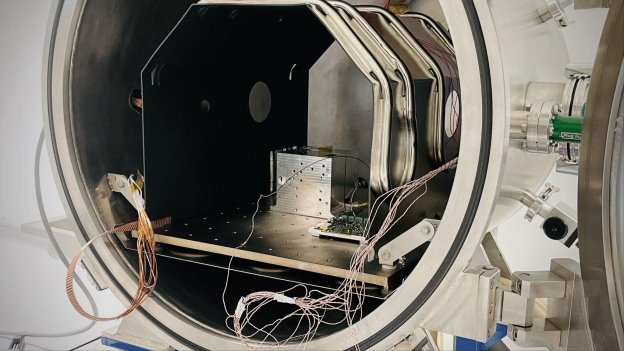
    Astrolight has been selected to supply an optical communications terminal for Aristotle University of Thessaloniki’s PeakSat Space Mission. This significant partnership involves integrating Astrolight’s ATLAS-1 optical terminal into PeakSat, a CubeSat mission that will demonstrate laser communication from low Earth orbit (LEO) to ground stations in Greece.

    The PeakSat mission represents a key initiative under the Greek National Satellite Space Project, jointly launched by the European Space Agency (ESA) and the Greek Ministry of Digital Governance. The project aims to validate next-generation optical communication technologies and is implemented through the EU-funded Recovery and Resilience Facility.

    “The collaboration between Aristotle University of Thessaloniki and Astrolight on the PeakSat mission exemplifies the dynamic growth we’re fostering in Greece’s space sector,” said Frédéric Rouesnel, Greek Connectivity RRF Project Manager at European Space Agency (ESA). The project is currently in the Greek Connectivity implementation phase, with plans for launch in 2025.

    This achievement highlights Lithuania’s growing capabilities in high-tech space applications and demonstrates how research-industry collaboration can drive technological innovation. We are proud to see an RTO Lithuania member spin-off making significant contributions to European space technology advancement.

  • RTO Lithuania Call for Collaborative Pilot Research Projects Launched

    RTO Lithuania Call for Collaborative Pilot Research Projects Launched

    Three Lithuanian RTOs members – the Center for Physical Sciences and Technology (FTMC), Lithuanian Energy Institute (LEI), and the Lithuanian Research Center for Agriculture and Forestry (LAMMC) – have announced today an annual joint call for pilot research projects for 2025. This initiative aims to foster the interdiscplinary and cross-institutional collaboration between three RTOs in addressing key national and societal challenges for a sustainable, climate-resilient and secure Lithuania.

    The call offers funding of up to €30,000 per project (€10,000 for each research group) and focuses on three key areas:

    • Smart/Sustainable Technologies
    • Environmental Technologies
    • Defence Technologies

    Projects must involve researchers from all three participating institutions. Successful projects are expected to result in high-impact scientific publications and lead to a further follow-up – the submissions for national and international R&D&I funding calls, thus providing a launch pad for emerging ideas that can have longer impact.

    An information event will be held at FTMC in Vilnius on March 5, where potential applicants can present their project ideas and find partners. For more information and registration, interested researchers can visit: https://forms.office.com/e/nC5Pe1rt5Q

    The deadline for submitting applications is March 31, 2025. The projects will have to be completed by March 31, 2026.

    Call documents:

    Contact persons:

  • RTO Lithuania prepares the S&T policy recommendations for the new government

    RTO Lithuania prepares the S&T policy recommendations for the new government

    The Association of Research and Technology Organizations (RTO Lithuania), representing three leading Lithuanian research institutes, has presented comprehensive recommendations for strengthening the country’s science, technology, and innovation (STI) ecosystem.

    The recommendations emphasize Lithuania’s potential to become a leading STI country while highlighting the need for fundamental changes in the current system. Among the key proposals is the initiation of a National Research, Technology and Innovation Programme focused on climate resilience and strategic autonomy, covering areas such as plant technologies, semiconductors, and renewable energies.

    A major emphasis is placed on bridging the gap between industry, research institutes, and universities through an Excellence in Applied Sciences programme. The association also calls for enhanced collaboration between science, business, and investors through pilot demonstration projects.

    To address brain drain and attract talent, RTO Lithuania recommends establishing a researcher attraction grant programme coordinated by the Lithuanian Research Council, including support for returning Lithuanian researchers and foreign experts.

    The recommendations also focus on reforming the scientific evaluation system, making it less dependent on quantitative indicators and more aligned with EU Research Area reforms. Additionally, the association proposes improvements to the industrial doctorate program and calls for increasing the number of PhD students while enhancing their study conditions.

    A crucial point in the recommendations addresses research funding, highlighting the current shortfall in R&D expenditure (0.47% of GDP) and emphasizing the need to reach the targeted 0.75% of GDP by the end of 2024, as agreed in the Agreement between Lithuanian political parties.

    The proposals also include strengthening science diplomacy, increasing internationalization through joint research programs, and enhancing funding for the Next 100 programme, which supports student internships at leading global institutions.

    These recommendations were presented by Sigitas Rimkevičius, President of the Association’s Governing Board, representing the collective vision of the Centre for Physical and Technological Sciences, the Lithuanian Energy Institute, and the Lithuanian Agrarian and Forestry Research Centre.

    The document can be found here: S&T policy recommendations